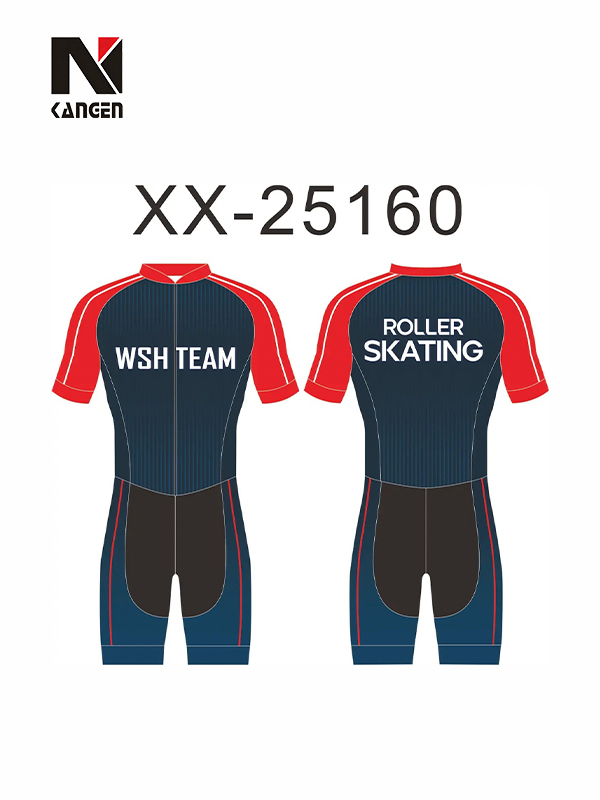
Full Workflow for Custom Roller Skating Suits: Six Key Stages from Requirement Briefing to Final Delivery
Many clubs ordering roller skating suits for the first time assume the process is simply “submit sizes, pick styles and wait for delivery”. They often end up with repeated design revisions, incorrect measurement data, continuous delivery delays, and suits that arrive only three days before a competition with ill‑fitting sizes. Problems rarely stem from one single step; they arise from a lack of end‑to‑end understanding of the custom workflow and unclear confirmation points and responsibilities for each stage.
Professional customisation of roller skating suits follows six core stages from requirement discussion to final delivery. Mastering this workflow helps clubs and coaches avoid common pitfalls and evaluate whether a supplier is capable of full‑cycle service.
Stage 1: Requirement Briefing & Scenario Confirmation
This is the starting point of the whole project and is often rushed. The manufacturer needs more than just quantity and colour. It must clarify the actual usage scenario: speed skating, aggressive skating or roller hockey? For regular training or provincial‑level and higher competitions? What are the athletes’ age groups and body types? How frequently will the suits be washed and replaced?
These details directly determine fabric selection, pattern design and production standards. For example, competition‑grade speed skating suits demand far better aerodynamic performance and fit than training suits, while youth training suits prioritise wash resistance and growth allowance. Kang’en (Tianjin) Sporting Goods Co., Ltd. proposes tailored initial plans according to the team’s training frequency and competition level instead of applying generic templates.
Stage 2: Fabric & Pattern Matching
Once requirements are confirmed, the supplier selects suitable options from its fabric and pattern libraries. Reliable manufacturers maintain dedicated pattern databases for different roller skating disciplines, covering compression ratios for speed skating one‑piece suits, joint mobility margins for aggressive skating suits, and two‑piece cut specifications for roller hockey uniforms.
Fabric selection is also scenario‑driven, which is a separate technical topic. The critical checkpoints are whether the supplier can provide fabric swatches for the intended use case and adjust fabrics and patterns simultaneously during sampling. Manufacturers with in‑house factories can carry out pattern tweaks and fabric trial runs in parallel for faster response.
Stage 3: Design Approval & Sampling
Never jump straight to mass production after approving artwork. Standard practice requires sampling first, followed by real‑training testing by athletes. Three points must be verified during sampling: whether the pattern maintains proper fit under dynamic movement, whether prints crack under stretching, and whether the fabric delivers acceptable sweat wicking and skin comfort.
Many customisation disputes happen because sampling is skipped or treated as a formality. Kang’en completes digital printing and heat transfer processes inside its own factory, enabling fast in‑house adjustments during sampling. The company holds ISO 9001 Quality Management System, ISO 14001 Environmental Management System and ISO 45001 Occupational Health and Safety Management System certifications, with standard inspection gates built into the sampling workflow.
Stage 4: Measurement & Size Collection
Measurement is the core distinction between custom apparel and ready‑to‑wear goods, and also the stage most prone to errors. Typical issues include self‑reported inaccurate sizes, relying only on height and weight without shoulder and arm measurements, and omitted growth allowance for young skaters.
The professional approach uses standard measurement forms and instructional guides from the supplier, with on‑site measuring available upon request. For tight‑fitting speed skating one‑piece suits, mandatory measurements include chest, waist, hip, shoulder width, arm length, leg length and height. Extra growth allowance is arranged for youth athletes when needed. Kang’en’s BRIGHTSIDE brand won the bid for the competition apparel procurement project of the Jiamusi Speed Skating Team for the 16th Provincial Games, delivering measured custom suits and accumulating solid experience in event‑grade garment measurement.
Stage 5: Mass Production & Quality Inspection
Mass production begins after measurement data is finalised. Clubs usually cannot monitor production on‑site, but three indicators signal a trustworthy supplier: regular progress updates, formal quality control procedures and support for mid‑run spot checks.
The advantages of closed‑loop in‑house manufacturing shine here. Cutting uses precise zoned layouts; sewing combines double‑stitched reinforcement and overlock stitching; printed fabrics go through colour fixation treatments. Quality consistency becomes difficult if these processes are outsourced to separate workshops. Kang’en adopts an integrated R&D, manufacturing, sales and service model. Cutting, sewing, printing and quality testing are completed in its own factory to minimise quality fluctuations caused by cross‑workshop handovers.
Stage 6: Delivery & After‑Sales Support
Handover of finished goods is not the end of the workflow. Professional suppliers provide standard packaging and logistics tracking, together with accessible reorder and after‑sales channels. Common follow‑up requests from clubs include minor adjustments for poorly fitted suits, mid‑season supplementary orders, and repeat batches of identical uniforms.
Working with a source manufacturer with stable after‑sales capacity means fabric batches and pattern files are archived for reorders, avoiding colour mismatch between the first and second batches. Kang’en’s custom service has served more than 1,000 clients across over 30 provinces in China, with mature processes for reorders and after‑sales response.
Core of workflow management: Clarify responsibilities for every stage
Most customisation failures stem from blurred accountability: who signs off the artwork, who double‑checks measurements, who feeds back sampling comments, and who bears liability for delivery delays. Defining responsible parties and confirmation milestones in advance for the six stages prevents disputes far better than arguing after problems arise.
For clubs, selecting a transparent, closed‑loop supplier with proven event procurement records is essentially reducing equipment risks for the whole season. For bulk customisation or workflow consultation, please contact Manager Xie at +86‑138‑2117‑2751 for tailored product information and quotations.